



Join The Forum To Get inspired Ideas


Which Wig Is Best for Alopecia? Top Wig Options for Hair Loss
Hair loss is a common problem in today's society, but its existence cannot be ignored. There are many underlying reasons, and it's important to know which styles of wigs on the market are suitable for you. For those suffering from hair loss, finding the right wig is not just about style—it's also about confidence and comfort. Today, we'll explore a detailed guide to hair loss to help you better face your daily work and life.
1.Best Wigs For Hair Loss
The best overall choice is a monofilament lace human hair wig. It has a natural look and is comfortable for everyday wear, priced between $200 and $500.
The most natural look is a hand-woven, all-lace human hair wig, which provides a concealed hairline and a realistic scalp, priced between $350 and $800.
For complete baldness, the best choice is a medical-grade wig with a silicone lining, suitable for those with complete or partial baldness, priced between $300 and $700.
For sensitive scalps, the best choice is a soft, hand-woven cap wig. Without combs or clips, it is non-irritating and suitable for chemotherapy patients or those experiencing hair loss, priced between $250 and $600.

An economical choice is a medical-grade synthetic lace forehead wig. It is affordable and suitable for everyday wear, priced between $50 and $180.
The best glue-free wig is an adjustable, glue-free cap wig. Because it is glue-free, it is suitable for sensitive skin, priced between $80 and $350.
Best 13x4 High-definition lace-trimmed human hair wig with a natural hairline, customizable parting, priced at $150-$450.
Best for alopecia areata: Hairpiece or partial coverage wigs, suitable for patchy or localized hair loss, priced at $100-$400.
Best for total alopecia: Full silicone medical skull wig, completely covers the scalp, secure fit, priced at $400-$1000 and above.
The best wig for hair loss sufferers is always the one that matches your stage of hair loss, scalp sensitivity, lifestyle, and budget, not just the most expensive or most popular style.
2.Comparison of Human Hair Wigs and Synthetic Wigs in Hair Loss Treatment
Human hair wigs offer the most realistic appearance and feel, priced between $150 and $1000+. With careful care, they can last 1-3 years or more. They are perfectly suitable for heat styling – using straighteners, curling irons, and hair dryers.
Daily maintenance is more demanding – requiring washing, conditioning, and styling. They are slightly heavier, but offer good breathability – depending on the cap design. Comfort for sensitive scalps is excellent. Soft cap design provides excellent comfort. Professional dyeing is available, and replacement frequency is lower.

Synthetic wigs are of good quality, priced between $30 and $300. Durability averages 3-8 months. Only some are made of heat-resistant fibers. Daily maintenance is lower, requiring minimal effort to maintain the style.
They are lightweight – more suitable for sensitive scalps. Breathability varies – some synthetic fibers can trap heat. Sensitive scalps can use lightweight medical-grade wigs, offering excellent comfort. Colors are fixed – cannot be chemically dyed, and replacement frequency is higher.
Choosing between a human hair wig and a synthetic wig to treat hair loss is one of your most important decisions—the right answer depends on your priorities, budget, and the impact of hair loss on your daily life.
3.Optimal Cap Shape: Comfortable, Realistic, Secure
For those with hair loss—especially those with complete baldness or highly sensitive scalps—the cap shape is even more important than the hair itself. A proper cap shape ensures the wig stays secure, comfortable, and natural, without relying on adhesives or clips that may irritate delicate skin.

Lace Front Cap: Lace front caps feature transparent lace along the hairline, creating a natural and realistic hairline that is almost invisible. Ideal for those with hair loss who desire a realistic hairline. Lace front caps are available with or without adhesive—if you need an adhesive-free style, choose a pre-cut lace or glue-free lace front cap design.
Monofilament Top: Each strand of hair is hand-sewn onto a transparent monofilament base at the top of the head, allowing the hair to move naturally in all directions, creating a realistic scalp appearance. Highly recommended for those with hair loss, as it simulates real hair growth without revealing the underside of the cap.
Hand-knitted Cap: Each strand of hair is hand-knotted and secured to the cap—creating the softest, most flexible, and most natural wearing experience. Free-moving wigs are now available. The hand-knitted cap gently conforms to the scalp without friction or pressure, representing the gold standard for comfort on sensitive scalps.
Silicone Lined Cap: The cap lining contains medical-grade silicone strips or a single strip, gently conforming to the scalp without glue, hairpins, or combs. Especially suitable for those with total or diffuse alopecia, as hair is thinning in these cases, making it impossible to secure with hairpins or combs. The silicone lining ensures a secure fit during movement.

Glue-free cap with adjustable anti-slip band: Built-in elastic or velvet anti-slip band securely holds the wig to the scalp without any adhesive. An adjustable strap at the back of the neck allows for a personalized, comfortable fit. Ideal for beginners and anyone avoiding adhesive products.

Breathable open cap: The machine-woven open cap design allows for free airflow, effectively reducing scalp stuffiness and sweating. Especially suitable for people in warm climates or with active lifestyles, where keeping the scalp breathable is crucial.
Hood secures without glue, hairpins, or combs: For those who cannot use traditional wig clips due to hair loss: The silicone-lined cap conforms directly to the scalp, securing the wig through friction.
The adjustable elastic strap at the back of the neck ensures a comfortable, pressure-free fit.
The velvet or anti-slip headband worn under the wig increases friction, eliminating the need for adhesives.
A custom-made wig cap to your head circumference provides the most secure fit.
Professional wig fitting consultations ensure proper wig wearing and stability during daily activities.


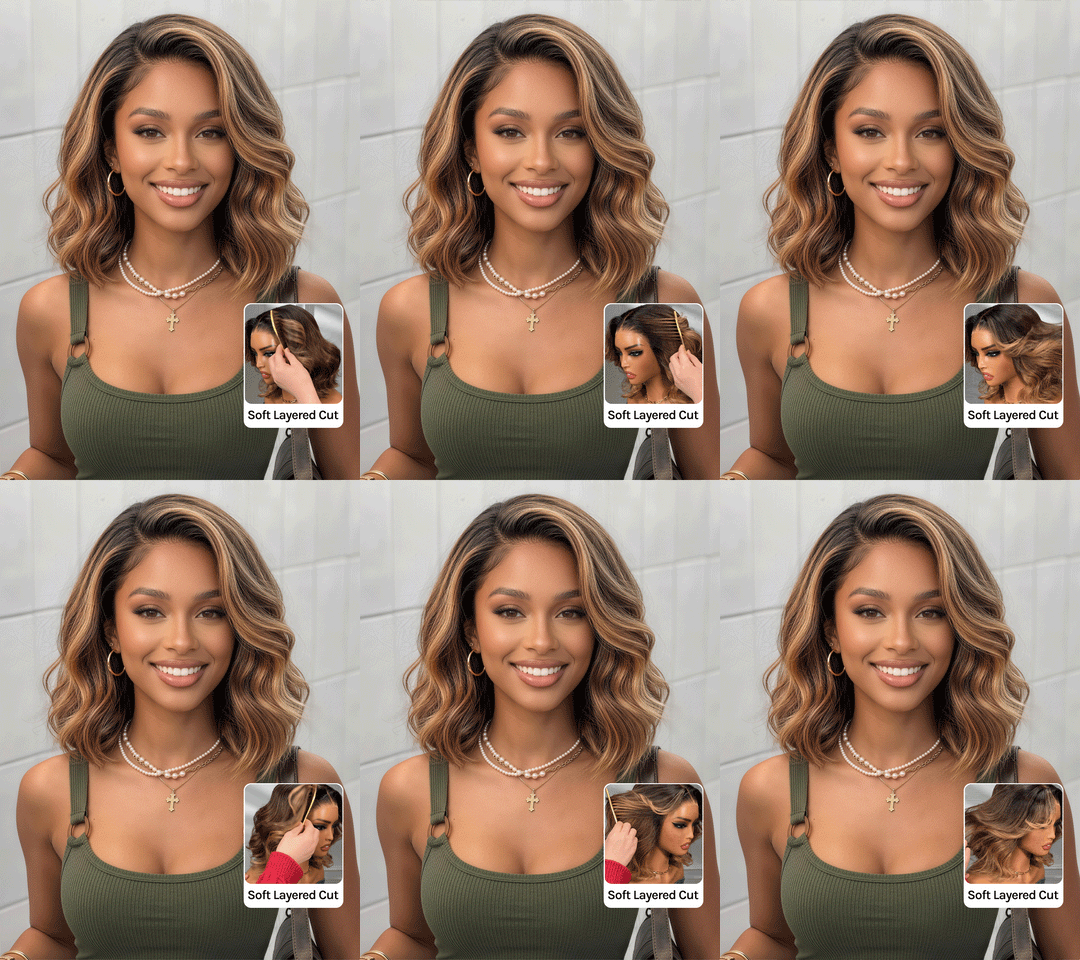
4.How to Choose the Right Wig Type for Different Stages of Hair Loss
Alopecia Areata (Patchy Hair Loss): Localized or patchy hair loss usually does not require a full-head wig. Hairpieces—partial wigs clipped or secured to thinning areas—may be sufficient and more comfortable. If the area of hair loss is large, a lightweight lace front wig with a monofilament top provides full coverage while remaining breathable and natural.
Total and Alopecia Acuminata (Complete Hair Loss): Complete hair loss requires a medical wig that fully covers the scalp. Prioritize wigs with silicone lining caps, hand-woven designs, and glue-free constructions. The lining cap must be soft and smooth, completely free of any irritating metal parts—there should be no exposed combs, stiff elastic bands, or rough seams directly contacting the bare scalp.
5.How to Measure Your Head Circumference to Find the Perfect Fit for a Wig?
Auricular Distance (Top of Head): Measure from the top of your head between your ears. Temple Distance: Measure from the back of your head between your temples. Most standard wigs fit a head circumference of 21-22.5 inches. If your measurements are outside this range, please choose a small, large, or custom-sized wig.

Best Lifestyle Wig Recommendations:
Hot Climate: Open-style breathable cap, lightweight synthetic or human hair.
Low Maintenance: Synthetic fiber styling wig, no glue cap, washable.
Natural Hairline Priority: High-definition lace forehead, hand-woven, pre-trimmed hairline.
Sensitive Scalp: Hand-woven, no clips or combs, silicone lining, hypoallergenic materials.
6.Summary
Whether you have alopecia areata or total alopecia, the right wig—tailored to your scalp sensitivity, lifestyle, and budget, and worn correctly—can truly help you regain confidence and comfort. If this is your first time buying a wig: Prioritize scheduling a professional wig fitting appointment—an experienced wig fitter will measure your head size, guide you in choosing the right cap style, compare real hair and synthetic wigs with you, confirm a safe glue-free wearing method, and help you prepare the necessary medical wig insurance documents.





